Maintaining a balanced lifestyle at work is an important part of supporting both physical and mental well-being. Many people spend a significant portion of their day at work, whether in an office, at home, or in another professional setting. While work can be rewarding and meaningful, it can also become demanding if healthy habits are overlooked. Finding balance does not mean achieving perfection every day. Instead, it means creating routines that help you stay productive while also caring for your health, relationships, and personal interests.
A balanced work lifestyle begins with recognizing that your well-being matters just as much as your professional responsibilities. When you take care of yourself, you are often better equipped to stay focused, solve problems, and handle challenges with a positive mindset. Small daily habits can make a meaningful difference, allowing you to perform your best without feeling constantly overwhelmed.
One of the most effective ways to maintain balance is by starting each day with a simple morning routine. Giving yourself enough time to wake up without rushing can help set a calm tone for the rest of the day. Enjoying a nutritious breakfast, drinking water, stretching for a few minutes, or taking a short walk can help you feel more energized before beginning work. Even a few quiet moments to organize your thoughts can improve focus and reduce unnecessary stress.
Planning your workday is another valuable habit. Rather than trying to complete everything at once, identify your most important tasks and organize them in a realistic order. Focusing on one task at a time often leads to better concentration and higher-quality work. Breaking larger projects into smaller, manageable steps can also make challenging assignments feel less intimidating and easier to complete.
Time management plays an essential role in maintaining a balanced lifestyle. Creating a schedule helps you use your working hours more effectively while leaving time for personal activities after work. It is helpful to set realistic expectations rather than overloading your calendar. Completing a few meaningful tasks well is often more productive than attempting too many tasks at once.
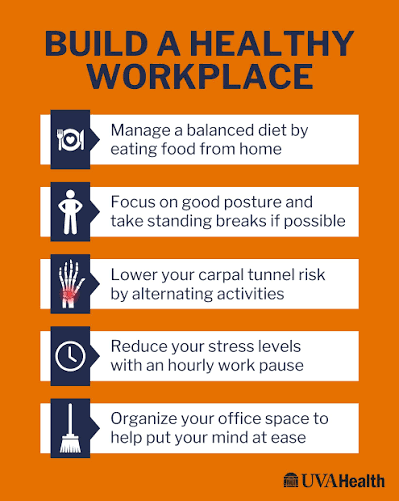
Taking regular breaks throughout the workday can improve both energy and concentration. Sitting or focusing on a screen for long periods may lead to mental fatigue and physical discomfort. Standing up, stretching, walking around the room, or simply looking away from your screen for a few minutes allows your body and mind to refresh. Short breaks can increase productivity by helping you return to your work with renewed attention.
Maintaining good posture is another important aspect of workplace wellness. Whether you work at a desk or in another environment, paying attention to how you sit or stand can help reduce unnecessary strain. Adjusting your chair, keeping your screen at a comfortable height, and positioning your workspace thoughtfully can contribute to greater comfort throughout the day.
Healthy eating habits also support balance at work. Nutritious meals provide the energy needed to stay focused and productive. Including a variety of vegetables, fruits, whole grains, lean proteins, and healthy fats helps support steady energy throughout the day. Preparing meals in advance or bringing balanced lunches to work can make healthy choices more convenient during busy schedules.
Hydration is equally important. Drinking enough water throughout the day supports concentration, energy, and overall body function. Keeping a water bottle nearby serves as a simple reminder to stay hydrated, especially during long meetings or periods of focused work.
Physical activity should remain part of your routine, even on busy workdays. While many jobs involve sitting for extended periods, finding opportunities to move can make a noticeable difference. Walking during lunch breaks, taking the stairs when possible, or stretching between tasks helps improve circulation and reduce stiffness. Regular movement supports both physical health and mental clarity.
Learning to manage stress is another key element of maintaining balance. Every workplace experiences busy periods, deadlines, and unexpected challenges. Rather than allowing stress to build, practice healthy coping strategies that help you remain calm. Taking slow, deep breaths, pausing briefly before responding to difficult situations, or stepping away for a short walk can help restore focus. Maintaining perspective and addressing one task at a time often prevents unnecessary pressure.
Setting healthy boundaries between work and personal life is especially important. While dedication to your career is valuable, allowing work to occupy every hour of the day can reduce opportunities for rest and personal fulfillment. Establishing a clear ending to your workday helps create time for family, hobbies, exercise, and relaxation. Turning off work notifications during personal time, when appropriate, can also help maintain this balance.
Communication contributes greatly to a healthy work environment. Being respectful, listening carefully, and expressing your thoughts clearly encourage positive relationships with colleagues. Supportive communication often reduces misunderstandings and creates a more enjoyable workplace. Asking for clarification when needed and offering help to others can strengthen teamwork and improve overall job satisfaction.
Maintaining a positive mindset can make daily challenges easier to manage. Every workplace has moments of pressure, but focusing on solutions rather than problems encourages resilience. Celebrating completed tasks, appreciating opportunities to learn, and recognizing personal growth all contribute to a healthier outlook. Gratitude for small accomplishments can improve motivation and create a greater sense of fulfillment.
Creating an organized workspace also supports balance. A clean and tidy environment reduces distractions and makes it easier to locate important materials. Spending a few minutes at the beginning or end of each day organizing your workspace can improve efficiency and create a calmer atmosphere.
Continuing to learn and develop professionally helps maintain long-term motivation. Exploring new skills, attending workshops, reading industry-related materials, or seeking constructive feedback encourages growth and keeps work engaging. Personal development not only benefits your career but also builds confidence and satisfaction.
Quality sleep remains one of the most valuable habits for workplace success. Rest allows the body and mind to recover, improving concentration, memory, and decision-making. Maintaining a consistent sleep schedule and creating a relaxing bedtime routine can help you wake feeling refreshed and ready to face the day.
Spending time with family and friends outside of work contributes to emotional well-being. Meaningful relationships provide encouragement, support, and opportunities to relax after busy days. Sharing conversations, enjoying meals together, or participating in activities with loved ones creates a healthier balance between professional and personal life.
Making time for hobbies is equally beneficial. Activities such as reading, gardening, cooking, painting, music, or spending time outdoors provide opportunities to recharge. Engaging in enjoyable interests outside of work supports creativity and helps reduce mental fatigue.
It is also important to accept that no workday will be perfect. Unexpected tasks, changing priorities, and occasional setbacks are part of nearly every profession. Instead of striving for perfection, focus on doing your best while remaining flexible. Adapting to challenges with patience often leads to greater confidence and reduced stress.
Reflecting on your progress can help you maintain motivation. At the end of each week, consider what went well, what you learned, and what improvements you would like to make. Regular reflection encourages continuous growth while helping you recognize your accomplishments.
A balanced lifestyle at work is built through consistent, thoughtful choices rather than dramatic changes. Small actions practiced every day often have the greatest impact over time. Drinking enough water, taking short breaks, staying active, organizing tasks, communicating well, and protecting personal time all contribute to lasting well-being.
Ultimately, maintaining balance at work is about creating a lifestyle that supports both career success and personal health. When you prioritize healthy habits, manage your time wisely, nurture positive relationships, and allow yourself time to rest and recharge, work becomes a more rewarding part of life rather than a source of constant pressure. By embracing steady and sustainable routines, you can enjoy greater productivity, improved well-being, and a healthier balance that benefits both your professional achievements and your everyday happiness.